🚀 Getting started
 Your onboarding guide
 Accessing your Qogita seller accountUnderstand your seller portalGet help from Qogita
📦 List your stock
 Upload and manage your price listSet your minimum order value
 Stock list types
 Keep your stock up to dateResponsible Person requirementsSelling electronics
🚚 Your first order
 Fulfil an order
 Packaging requirements
 Shipping dangerous goods
 Regenerate a shipping label
🇬🇧 Selling to the United Kingdom
 Selling to the UK
 Qogita's legal entity and VAT details
 Customs for parcel shipments from Germany
🇺🇸 Selling from the United States
Selling from the United StatesShip your own orders in the United States💶 Get paid
Request your paymentTrack your paymentInvoices and value-added taxGet your supporting documentsGet help with a payment problem⚖️ Claims
Understand a claimDispute a claimClaim costs and returnsKeep your claim rate low📈 Grow
Seller metricsGrowing your businessBulk pricingSelling pre-ordersEnterprise ordersUnderstand a claim
A claim is raised when a buyer reports a problem with an order. Most orders arrive without any problems, and you only pay for problems that are your fault.
How a claim reaches you
- The buyer reports the problem and sends their evidence, such as photos.
- Our Claims team reviews the evidence and decides who is at fault. This can be you, the buyer, the carrier or Qogita.
- If the claim is approved and you are at fault, we send you an email and the claim appears on the Claims page in the seller portal.
Buyers have 10 days after delivery to raise a claim.
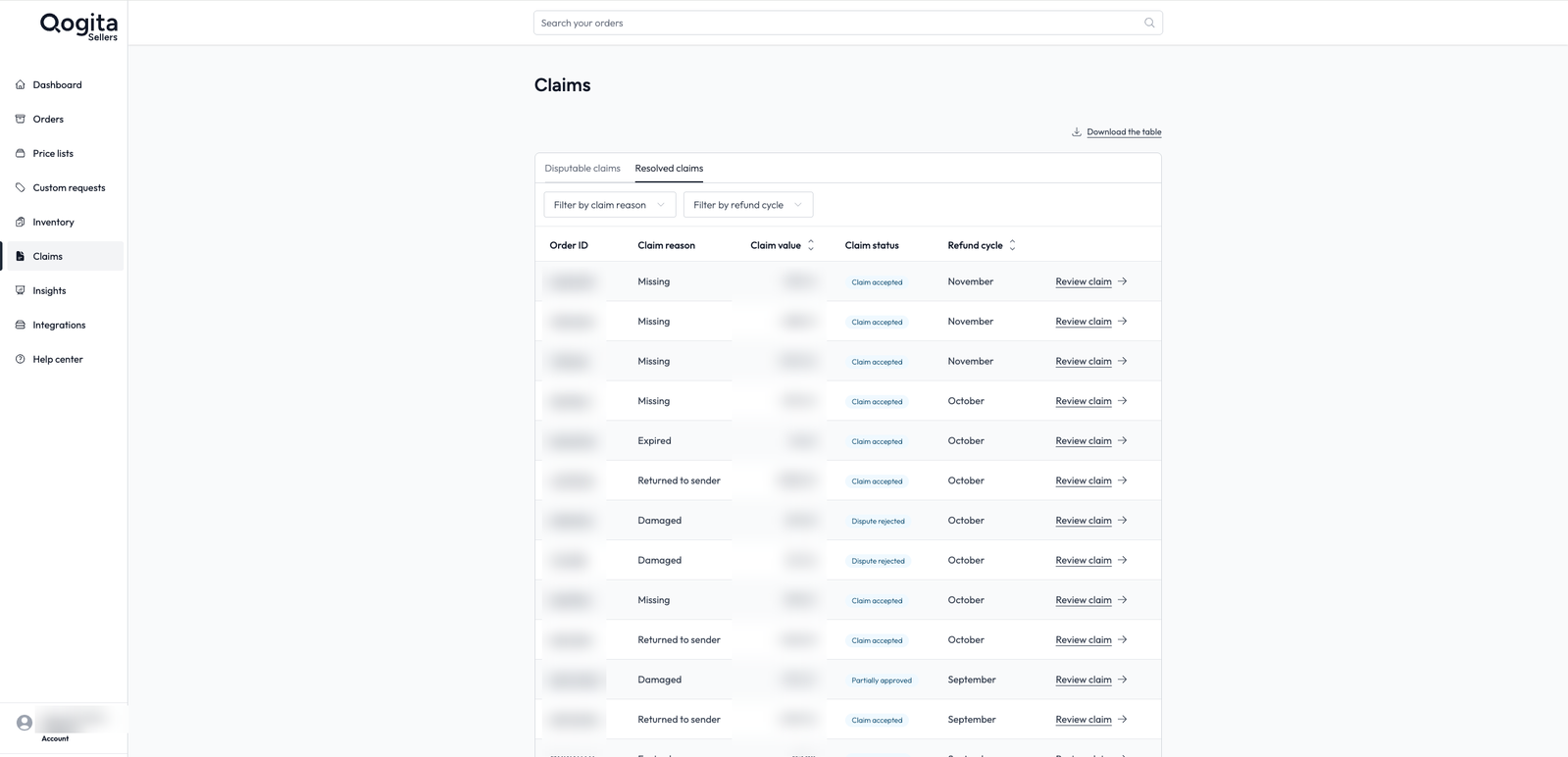
What you see on the Claims page
The Claims page shows approved claims where you are at fault, and orders that were returned to you. For each claim you see the order number, the products and their barcodes (GTINs), the number of units and the amount claimed. You can also see the evidence the buyer sent.
Types of claims
A buyer can raise a claim when products arrive damaged, when products are missing or when the wrong products arrive. They can also raise a claim when products are expired, decoded or fake, or when the labels don't meet European Union rules, for example when the local language or the Responsible Person is missing. Decoded means the batch codes or other tracking marks were removed.
What to do next
If you think a claim is wrong, you can dispute it once the outcome is that you are at fault. For the time limit and the steps, see Dispute a claim.
To see how a claim affects your payment, see Claim costs and returns.